Tesla shares could face a steep fall if the S&P 500 slides into a bear market, according to a recent analysis arguing that the electric vehicle maker’s valuation leaves almost no margin for error. The warning follows the Federal Reserve’s decision to raise interest rates at its September meeting, a move tied to renewed inflation pressure from soaring oil prices.
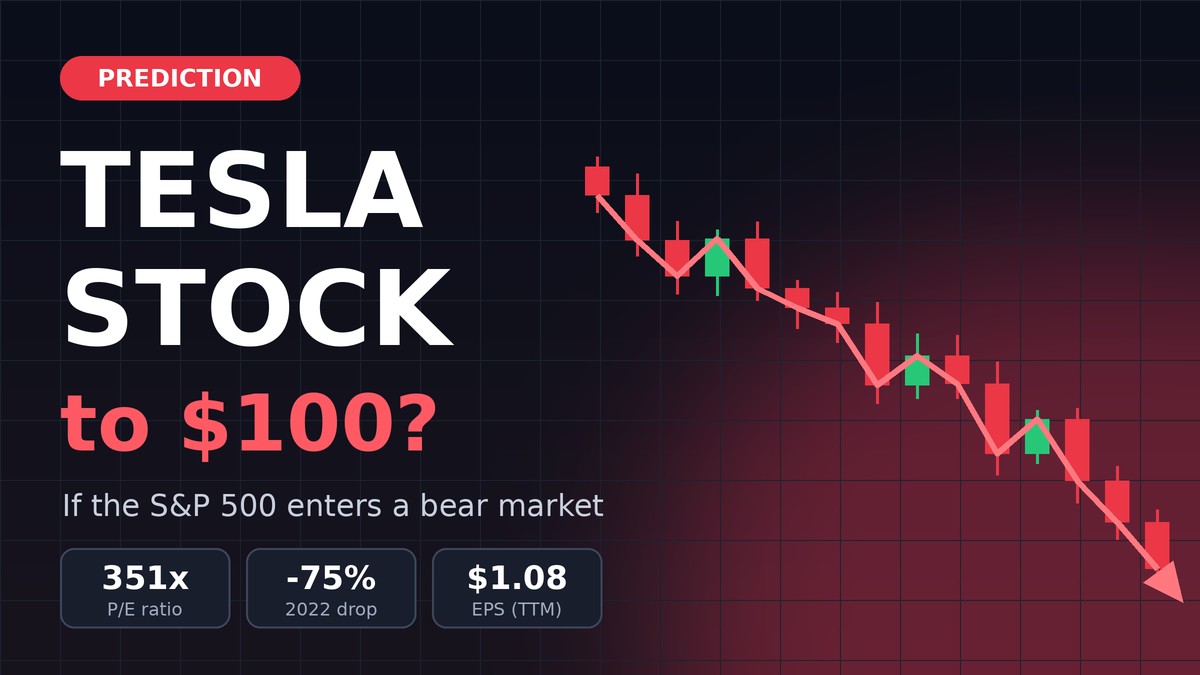
The key number in the argument is 351. That is Tesla’s price-to-earnings ratio, based on trailing 12-month earnings of just $1.08 per share, down from $4.30 two years ago. The Nasdaq-100 trades at about 34 times earnings, so Tesla costs roughly ten times as much per dollar of profit as a basket of the largest U.S. tech companies.
The prediction that Tesla stock could plunge rests on precedent. In the last bear market, Tesla fell 75% from its peak to a low near $108. The analysis argues a repeat could be worse because earnings are thinner now. It adds that the Cybercab robotaxi and the Optimus humanoid robot, the products bulls are counting on, are still far from generating meaningful revenue.
Why a Bear Market Is Back on the Table
The S&P 500 last sat in bear territory during 2022 and 2023. Inflation stayed high during that period, and the Fed responded by lifting its benchmark rate from near zero in March 2022 to a range of 5.25% to 5.50% by July 2023. Rising oil prices are now pushing inflation higher again, and the September hike suggests policymakers are prepared to tighten once more.
Valuations make the setup more fragile. The S&P 500’s Shiller cyclically adjusted price-to-earnings (CAPE) ratio stands at 41.2, according to the analysis. That is the index’s second-highest reading since the dot-com bubble peaked in 2000, when CAPE rose above 44. The author argues that a market this expensive is more exposed to a severe downturn if higher rates weigh on the economy and investor sentiment.
Tesla’s Valuation by the Numbers
| Metric | Figure |
|---|---|
| Trailing 12-month EPS, two years ago | $4.30 |
| Trailing 12-month EPS, now | $1.08 |
| Current P/E ratio | 351 |
| Nasdaq-100 P/E ratio | 34.1 |
| First-half 2026 deliveries | 838,149 (up 16% year over year) |
| 2022 bear market decline from peak | 75%, to about $108 |
| P/E ratio at that low | About 30 |
| Decline needed to return to 30x earnings | About 91% |
Deliveries Recovered, Profits Did Not
Tesla’s vehicle sales fell in both 2024 and 2025. Chinese manufacturers such as BYD, Geely, and Zeekr gained ground with similarly equipped cars at lower starting prices. Those brands are winning share in China and also in contested markets like Europe.
Sales rebounded in the first half of 2026. The analysis attributes much of that recovery to high oil prices pushing buyers toward EVs across the industry, rather than to anything specific to Tesla. Tesla also cut prices across its lineup to drive volume, which traded profitability for units and helps explain why earnings kept shrinking while deliveries rose.
What a Drop to $100 Would Actually Mean
Multiplying the analysis’s own figures (a 351 P/E on $1.08 in earnings) implies a share price of roughly $380. A fall to $100 would be a decline of about 74%, close to the 2022 drawdown. The analysis’s harsher scenario, a return to 30 times earnings, would imply about $32 per share, even if profits don’t fall further.
Background: How the Last Sell-Off Played Out
Investors typically cut risk during bear markets, and the most expensive holdings tend to go first. Tesla followed that pattern. The stock reached its trough around the turn of the year into 2023, and at that point its multiple had compressed to about 30 times earnings.
The Autonomy and Robotics Bet
The case for paying a premium for Tesla rests largely on products that don’t yet contribute meaningful revenue.
Cybercab Still Waits on Regulators
The Cybercab is designed to offer on-demand autonomous rides. Its full self-driving software still lacks regulatory approval in most U.S. states. Ashok Elluswamy, Tesla’s vice president of AI software, said the robotaxi program had logged around 380,000 miles of driverless operation across two states as of June 30.
Waymo Holds a Clear Lead
Alphabet’s Waymo is already completing more than 500,000 paid autonomous trips per week across 15 major U.S. cities, according to the analysis. That scale gap is central to the argument that Tesla’s robotaxi ambitions can’t yet support its current valuation.
Weighing the Other Side
The downside case is one analyst’s view, and it depends on two uncertain events: a bear market actually arriving, and investors abandoning richly valued names the way they did in 2022. Tesla shareholders who stay invested are betting that recovering deliveries, a lasting shift toward EVs, and eventual robotaxi and robotics revenue will rebuild earnings before any market downturn. For now, the gap between Tesla’s valuation and its profits leaves the prediction about Tesla stock as a live risk that investors can’t easily dismiss.
Disclaimer: This content was partially produced with the help of AI tools and This content is for informational purposes only and not investment advice.