
U.S. consumer prices rose 0.4% in October on a seasonally adjusted basis, the Bureau of Labor Statistics reported Nov. 10, exceeding the 0.3% increase economists surveyed by Dow Jones had expected. The consumer price index is a broad gauge of costs across the U.S. economy. Core CPI, which strips out volatile food and energy costs, rose 0.3%, also above the 0.2% forecast.
The report did not include an annual inflation rate. The BLS said the government shutdown last year prevented it from collecting sufficient data in October 2025, leaving no comparable year-earlier figure. It did publish annual figures for some individual items where data was available.
September headline CPI rose 0.6%, while core CPI was up 0.3%.
The stronger-than-expected October reading landed at a critical moment for the Federal Reserve as it considers its next interest-rate move. Stocks fell after the release, while Treasury yields jumped.
Speaking in London on Tuesday morning before the release, Fed Governor Christopher Waller said a hot inflation report could push him toward advocating a half-point increase in December. He specifically said such a hike should be on the table if core CPI was “around 0.3.” Hours later, core CPI came in at exactly that level.
Traders are now fully pricing in a quarter percentage-point increase at the Fed’s Dec. 8-9 meeting, according to CME Group’s FedWatch tool. The odds of a half-point hike rose to 13.6% after the report, compared with around zero before it.
Karen Manna, a fixed income investment strategist at Federated Hermes, said the hotter reading arrived at a difficult moment for markets. In her view, it renewed questions about whether the Fed had done enough to control inflation and increased the risk of interest rates moving higher and remaining elevated for longer.
Shelter and food drive October increase
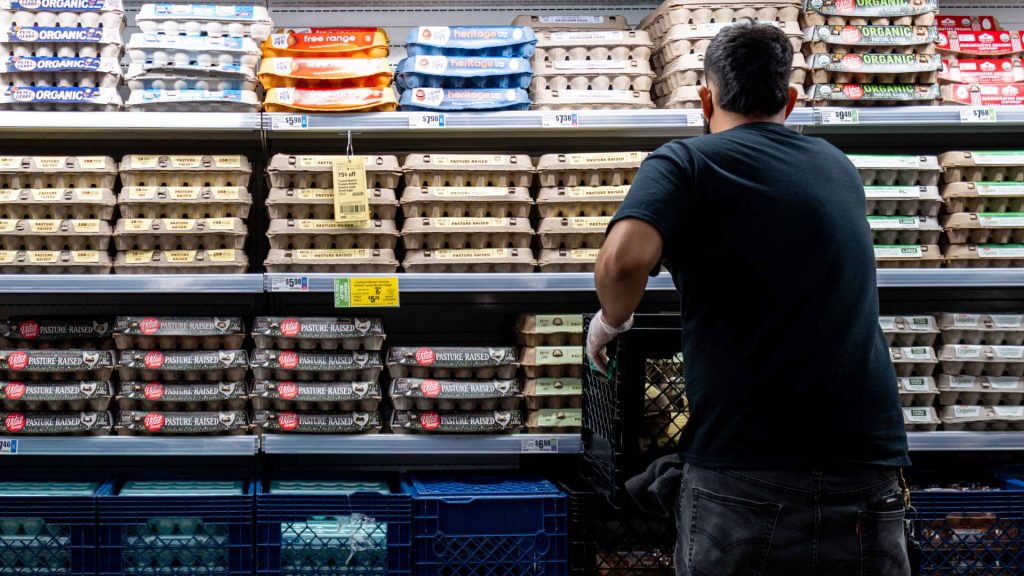
Shelter costs rose 0.3% and accounted for more than 30% of the headline increase, the BLS said. Food prices accelerated 0.5%, with snacks up 1%, beef up 0.9%, and meats, poultry, fish and eggs up 0.5%.
The energy index rose 0.7% even though gasoline prices had been falling in recent weeks. The gasoline index was up 1%, while natural gas fell 0.8%. Electricity prices rose 0.9%.
Transportation services jumped 0.8%. New vehicle prices rose 0.2%, but used cars and trucks fell 1.2%. Airline fares increased 0.4%. Apparel, a tariff-sensitive sector, rose 0.1%. Medical care commodities prices rose 0.5%.
Fed officials signal more tightening
At its October meeting, the Fed voted 10-2 to keep its benchmark rate in a range of 3.75% to 4% while awaiting incoming data. Markets had already expected a hike next month, and the inflation data may have sealed the case.
Inflation has run above the Fed’s 2% target for about 5½ years. Fed officials have expressed concern that the effects of the Iran war and President Donald Trump’s tariffs are becoming embedded in the economy, while hyperscaler spending on the artificial intelligence buildout has also pressured prices.
Dallas Fed President Lorie Logan, speaking Tuesday after the report, said she sees a need for two additional quarter-point increases. She noted that the CPI report was “higher than expected” and said she is worried that the personal consumption expenditures price index, the Fed’s primary inflation-forecasting metric, could also move higher when it is reported later in November.
Logan said the Fed might need to move faster this winter than it had during the fall. After two further increases, she favored pausing to assess economic and financial conditions before deciding whether additional action was needed.
Philadelphia Fed President Anna Paulson, speaking later Tuesday, identified tariffs, energy prices and the AI buildout as the principal forces sustaining inflation. Although research had suggested tariff effects were starting to diminish, she said the latest figures showed continuing pressure.
Paulson favored further gradual tightening for now, while stressing that the exact path would depend on how conditions developed and on the incoming data.
Consumers keep spending as businesses plan increases
Consumers continued to spend, with retail sales up 0.8% in September, according to the Commerce Department. Businesses, however, plan more price increases. A net 37% of businesses responding to the October National Federation of Independent Business survey said they plan to raise prices in the next three months, the highest level since July 2022.